Create and upload
Teachers create courses and upload PDF, DOC/DOCX, PPT/PPTX, XLS/XLSX, TXT, HTML/HTM, ZIP, MP3, MP4, and WAV materials.
VIP Research Group
ChatbotLLM helps teachers create course-specific chatbot models from the materials they already use in class, then lets students ask questions through browser and messaging clients.
Dr. Chang's research group proposed, developed, piloted, and published an Automatic Text Summarization service named Ask4Summary in 2021 based on Natural Language Processing techniques (Pal, Chang, & Iriarte, 2021). It answered user questions by identifying relevant content and generating summaries only based on the provided materials (Saleh, Chang, & Iriarte, 2022; Saleh, Iriarte, & Chang, 2022) and reached 82.69% success rate for providing quick responses of course relevant questions.
Following Ask4Summary, an Alberta Innovates/Athabasca University Summer Research Studentship project was proposed in 2024 to design and develop ChatbotLLM, an open-access system for training educational chatbots on uploaded course materials. ChatbotLLM's lead developer, AU BScCIS graduate Supun De Silva, won IEEE Northern Canada Section's Capstone Project Award on October 18, 2024.
Teachers create courses and upload PDF, DOC/DOCX, PPT/PPTX, XLS/XLSX, TXT, HTML/HTM, ZIP, MP3, MP4, and WAV materials.
The server reads the materials with NLP tools and prepares course-specific language models and retrieval data.
The chatbot dynamically loads the relevant course model and responds to student questions from course content.
Anonymous interaction data and feedback help teachers and researchers evaluate chatbot response quality.
The VIP Research Group is led by Prof. Maiga Chang at the School of Computing and Information Systems, Athabasca University. This large language models for chatbots service (chatbot.vipresearch.ca) is one of the research group's works, with follow-up research planned for future projects.
Almost all of Prof. Chang's works are open access or open source. This web service is open access and currently runs on a self-sponsored server, like other research projects listed among Prof. Chang's advanced projects. It is intended to remain online, improving, and accessible as long as operating costs are affordable and covered.
If access volume becomes too high, or if a business or commercial institution uses the service for profit, the terms may change to include donations, personal, academic, or business licensing, or subscription models.

Our research trains course-grounded language models, builds educational chatbots, runs real-course experiments, and analyzes teacher and student feedback.
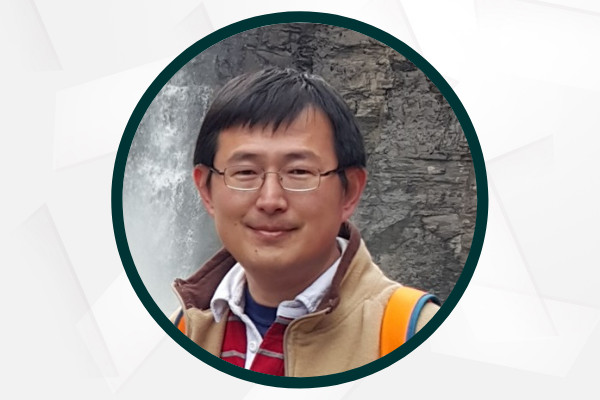
Dr. Maiga Chang is a Full Professor in the School of Computing and Information Systems at Athabasca University, Canada.
The project focuses on chatbots that answer student questions from large language models and retrieval context trained on specific course content.
2023 - Present
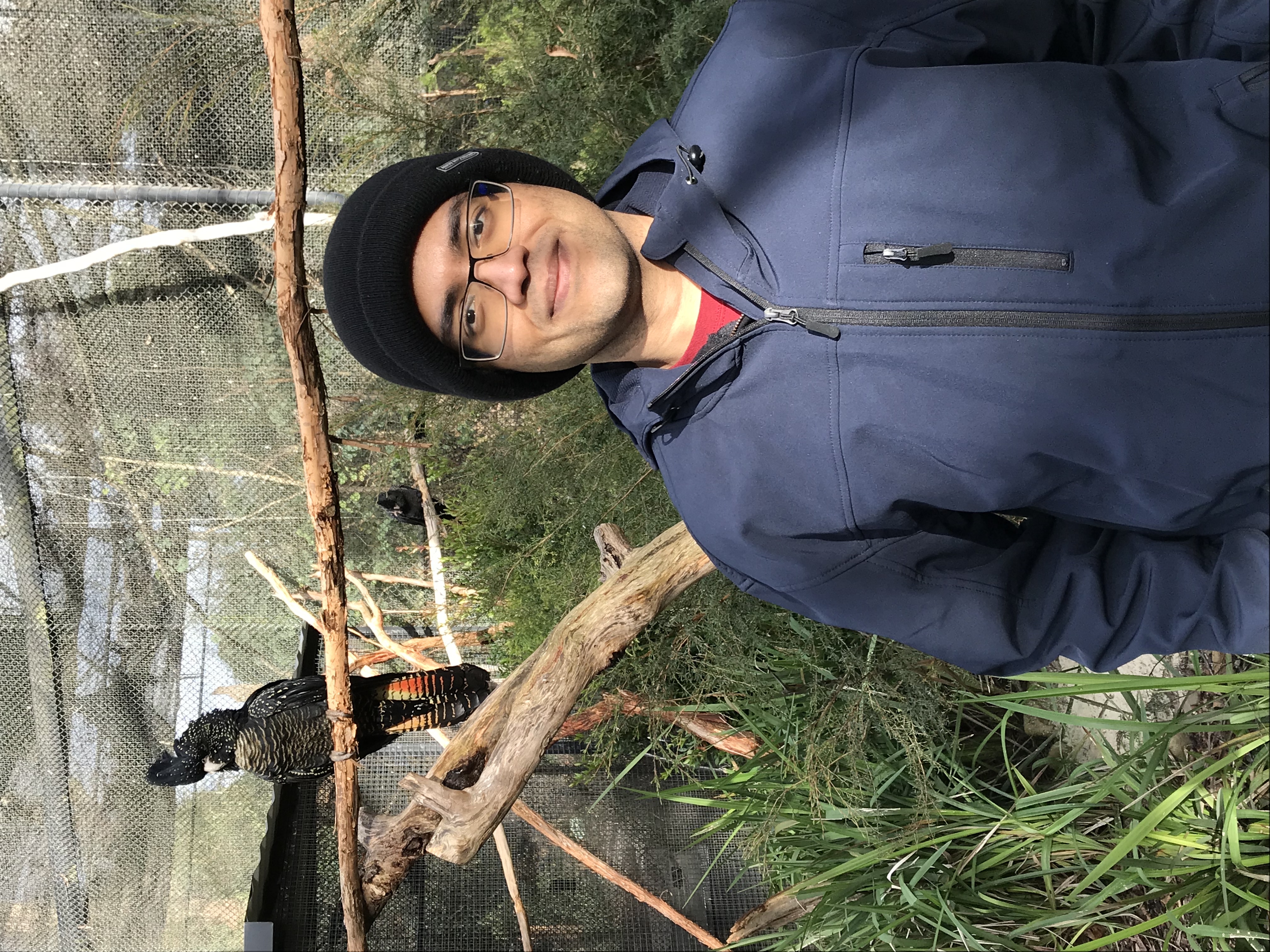
Supun De Silva is a Master of Science in Computing Information Systems student at Athabasca University, specializing in artificial intelligence and intelligent systems. He completed his Bachelor of Science in Computing Information Systems with Great Distinction and a 4.0 GPA, and received the Governor General's Silver Medal. As an NSERC research assistant and lead developer on ChatbotLLM, his work focuses on full-stack web development, natural language processing, and educational AI systems.

2025 - Present
Zibusiso Mafaiti is a second-year student pursuing a BSc in Computing and Information Systems. He is passionate about research and its impact on modern learning.
2025 - Present
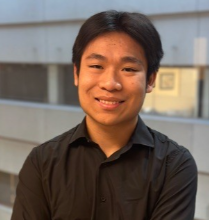
Owen is a software developer in the School of Applied Science at Queen's University, Canada.
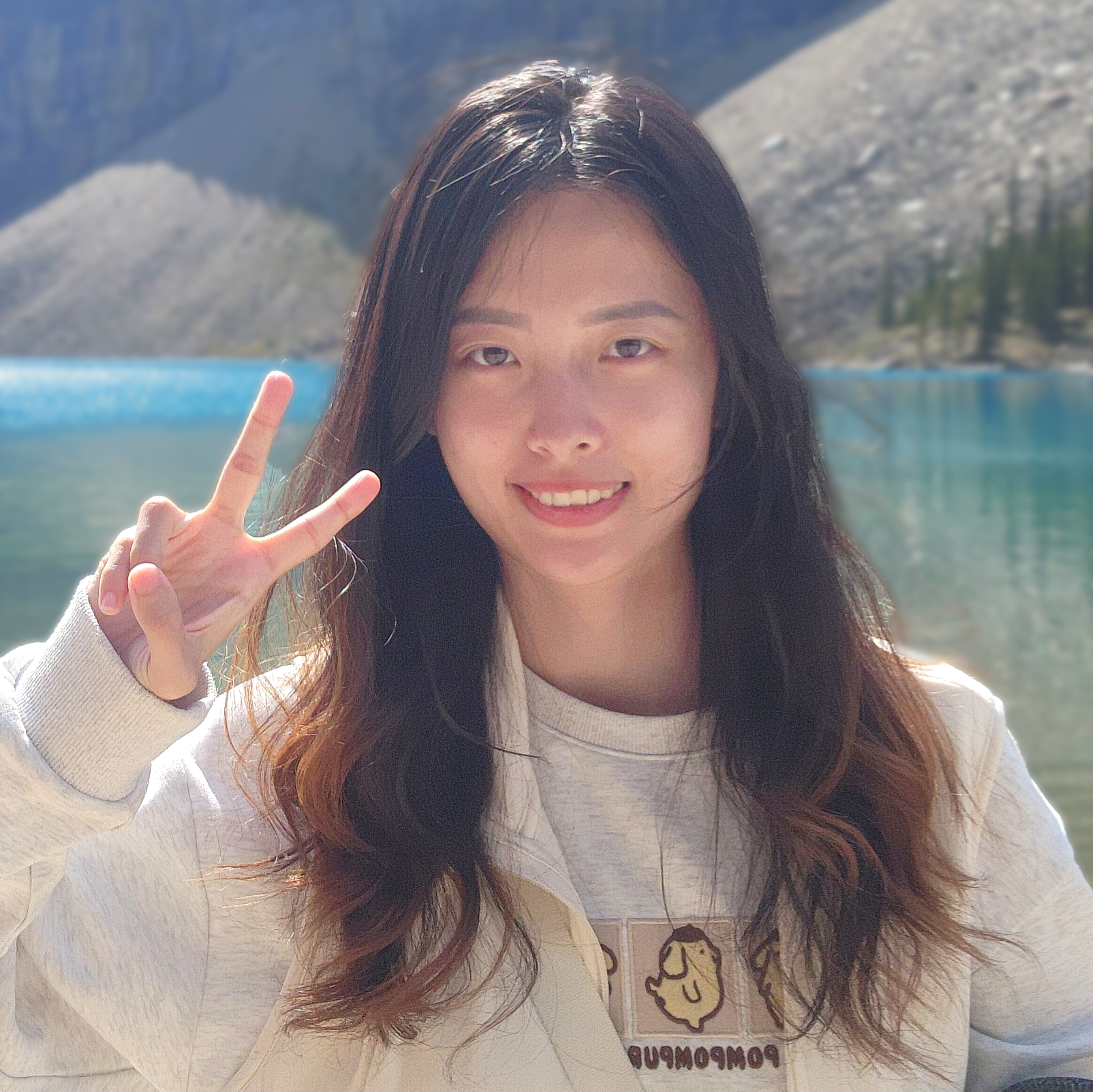
2025
Tina is an undergraduate student majoring in Digital Multimedia Design at Cheng Shiu University, Taiwan. She contributes to flyer design and visual layout work.

2025
Victoria is a fourth-year university student majoring in Information Management at National Central University in Taiwan.
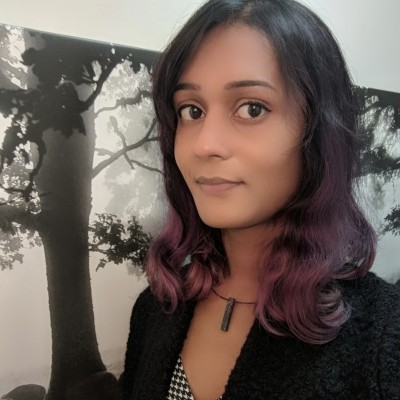
2026
Maya is a fourth-year BSc in Computing and Information Systems student at Athabasca University. She is passionate about interactive systems.
In this video, Supun DE SILVA explains the functions and use of ChatbotLLM as well as MASA, a browser-based chatbot app powered by ChatbotLLM research conducted by the VIP Research Group at Athabasca University, with the help of an independent worker server.
Introduces ChatbotLLM, the IEEE Northern Canada Section Capstone Project winner, and its support for course materials including documents, media, OCR, speech recognition, and ZIP packages.
The improved Worker-enabled MASA (Mobile-Accessible Seamless Agent), a browser-based chatbot app powered by ChatbotLLM research shows that in the most of time worker-enabled MASA responded quicker than the AI-Powered Live Chat app and also provided information for the users according that they may want to see while asking a question.
This guide shows how to use ChatbotLLM directly in a browser.
Earlier version of subprocess-based MASA (Mobile-Accessible Seamless Agent), a browser-based chatbot app powered by ChatbotLLM research shows that MASA responded generally in the same speed like (sometimes had couple of seconds slower than) the AI-Powered Live Chat app but provided information for the users according that they may want to see while asking a question.
This guide shows how to use ChatbotLLM on Discord.
This guide shows how to use ChatbotLLM through the LINE messaging service.
ChatbotLLM is an open-access educational chatbot service for training course-specific chatbots from materials uploaded by teachers. Teachers create a subject, choose configuration options, upload materials, and students can then ask questions through browser or connected client applications.
The published ChatbotLLM and MASA papers emphasize teacher-grounded retrieval. ChatbotLLM searches teacher-provided course materials with sentence embeddings and cosine similarity, returns the top matching course paragraphs, and can say it does not know when no relevant course content is found.
Teachers can upload common teaching materials including PDF, PPT/PPTX, DOC/DOCX, XLS/XLSX, TXT, HTML/HTM files, MP3, MP4, WAV, and ZIP packages containing supported files. OCR, speech recognition, URL extraction, web crawling, enrichment, and data preparation are supported.
Rephrase mode sends retrieved course paragraphs to a generative model to make the answer more readable while preserving original meaning and key terms. RAG mode sends the question, retrieved context, and prompt to a generative model so the final answer is generated from selected course context.
Client apps can use endpoints in the includes folder. Common endpoints include get_trained_models.inc.php, get_course_details.inc.php, get-model-names-for-course.inc.php, get-model-output.inc.php, and update_feedback.inc.php.
Yes. There is a browser-based mobile-accessible client, and the MASA paper shows endpoint documentation on how external clients can request ChatbotLLM responses. The service can also be connected to Discord, LINE, and VEE.
A subject can be public or protected with an access key. Client apps can check and submit access keys through endpoints such as verify_access_key.inc.php and get_course_details.inc.php. Invalid private subject access is rejected and recorded.
Each chatbot response can be stored with a feedback ID. Client apps can call update_feedback.inc.php with the feedback type, rating, and wording to support research comparisons of learner perceptions.
The Publications section links to the VIP-Bot Ministry of Higher Education 2026 fiches, the MASA AI-MetaACES 2026 paper, and the ChatbotLLM ICIET 2025 paper.